

U.S. will no longer share sensitive technologies with Hong Kong
U.S. will no longer share sensitive technologies with Hong Kong
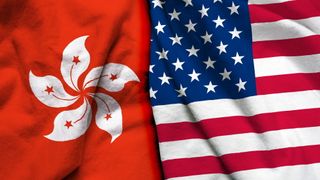
As China tightens its grip on Hong Kong using a controversial new security law, the U.S. has announced information technology will no longer trade sensitive engineering science with the nominally autonomous city-state.
On Monday (June 29), U.Due south. Secretary of Commerce Wilbur Ross appear the measure out over fears that exporting defence innovations to Hong Kong could put national security at chance.
- Stay safe online with our pick of the best antivirus software
- All-time VPN: pick the ideal provider for watertight privacy wherever you are
- Simply in: Serious Mac security flaw still unpatched past Apple after 6 months
He warned of U.S. defence technologies ending up in the hands of Chinese military and security forces, with the potential of being leveraged for state-backed cyberattacks.
The technologies in question include "telescopic lenses for guns, satellites and reckoner chips," according to the Wall Street Journal. The Journal noted that the U.S. is Hong Kong'due south second-largest trading partner later on mainland People's republic of china.
"With the Chinese Communist Party'due south imposition of new security measures on Hong Kong, the risk that sensitive U.South. technology will be diverted to the People'southward Liberation Army or Ministry of State Security has increased, all while undermining the territory's autonomy," said Ross in a statement posted on the Department of Commerce website.
"Those are risks the U.S. refuses to accept and take resulted in the revocation of Hong Kong's special status."
Serious repercussions
Ross slammed the Chinese government for its decision to impose new national-security legislation on Hong Kong, which has operated every bit a special authoritative region with broad economic, legal and political autonomy since the U.Thousand. returned Hong Kong to People's republic of china in 1997.
The U.S. restricts the export of sensitive defence applied science to mainland People's republic of china, but Hong Kong has been an exception to those rules considering it was seen every bit quasi-independent from Beijing. That is no longer the case.
"Commerce Department regulations affording preferential handling to Hong Kong over Mainland china, including the availability of export license exceptions, are suspended," Ross said. "Further deportment to eliminate differential handling are too existence evaluated."
He urged China to reconsider its present course, with runs counter to the agreement Beijing fabricated with Britain to leave Hong Kong lonely until 2047.
"We urge Beijing to immediately reverse grade and fulfill the promises it has made to the people of Hong Kong and the world," Ross said.
Liberty at stake
The new "Constabulary of the People'southward Democracy of Red china on Safeguarding National Security in the Hong Kong Special Authoritative Region" was rushed through China'southward prophylactic-stamp parliament earlier this week and went into effect today (July one), the 23rd anniversary of the British departure.
The law makes whatever China deems to be "secession," "subversion," "terrorism" and "foreign bunco" criminal acts that can conduct life sentences. Stopping traffic, every bit pro-republic demonstrators in Hong Kong routinely do, counts as "terrorism"; occupying government offices counts as "subversion"; calling for independence is "secession."
For many, the new police signals the end of Hong Kong's right to self-governance. The city-state's independent legislative council is already dominated past pro-Beijing lawmakers, and China has long looked to adjourn liberty of spoken communication in Hong Kong, where the censorship common throughout the mainland does not employ.
Jake Moore, a security specialist at ESET, told Tom's Guide: "When tensions are loftier, governments have the ability to make quick or even rash decisions in the name of security. Although this might be to the detriment to national relations, the security of sensitive data is paramount and remains a key threat to intelligence.
"At the heart of decisions like this lies the all important threat of data breaches. However big that risk is, some nations take even more precautions and clearly do all they tin can to mitigate any proposed chance that may be presented currently or in the futurity."
- Read more: The best working China VPNs for residents and visitors

Source: https://www.tomsguide.com/news/hong-kong-us-defense-exports
Posted by: mullinsonew1945.blogspot.com
0 Response to "U.S. will no longer share sensitive technologies with Hong Kong"
Post a Comment